
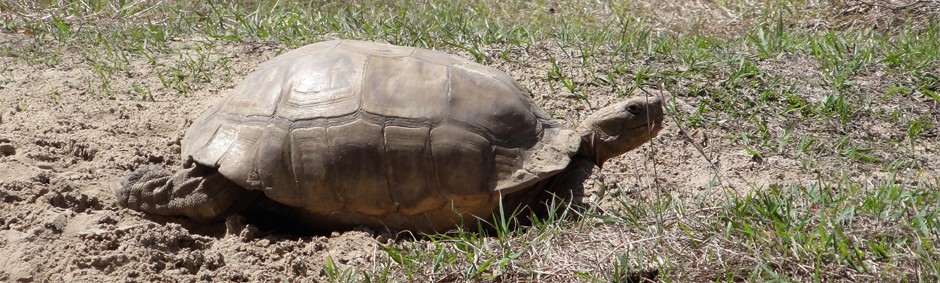
Treating a dehydrated and starving African spurred tortoise (Centrochelys sulcata)
An emergency case I was called to on a stormy day: A 50 cm long, 5 Kg C. sulcata, has been reported with anorexia and exhaustion. Upon arrival to the […]
List of publications of The ICTC president
REFEREED ARTICLES
1. Zuri, I., Nguyen, D., Daniels, Y. and Halpern, M. 2007. Skin, gland and urine odors elicit intense investigation by male gray short-tailed opossums, Monodelphis domestica. Can. J. Zool. 85: 450-457.
2. Zuri, I., Dombrowski, K. & Halpern, M. 2005. Skin and gland but not urine odors elicit investigatory response in female gray short-tailed opossums (Monodelphis domestica). Anim. Behav. 69: 635-642.
3. Zuri, I. & Halpern, M. 2005. Modification of odor investigation and discrimination in female opossums (Monodelphis domestica) following the ablation of the accessory olfactory bulbs. Behav. Neurosc. 119: 612-21.
4. Daniels, Y., Halpern, M., & Zuri, I. 2005. Food preferences of captive gray short-tailed opossums (Monodelphis domestica). Lab. Anim. 34:39-41.
5. Halpern, M., Daniels, Y. & Zuri, I. 2005. The role of the vomeronasal system in food preferences of the gray short-tailed opossum, Monodelphis domestica Nutrition & Metabolism 2: 1-3.
6. Zuri, I., Su, W. and Halpern, M. 2003. Conspecific odor investigation by gray short-tailed opossums (Monodelphis domestica). Physiol. Behav. 80: 225-232.
7. Zuri, I. and Halpern, M. 2003. Differential effects of lesions of the vomeronasal and olfactory nerves on garter snake (Thamnophis sirtalis) response to airborne chemical stimuli. Behav. Neurosc. 117: 169-183.
8. Zuri, I. and Terkel, J. 2001. Reversed palatal perforation by upper incisors in ageing blind mole-rats (Spalax ehrenbergi). J. Anat. 199: 591-598.
9. Gottreich, A., Zuri, I., Hammel, I. and Terkel, J. 2000. Noninvolvement of testosterone in aggressive defense behavior in the male blind mole-rat Spalax ehrenbergi. Agg. Behav. 27: 64-72.
10. Gottreich, A., Zuri, I., Barel, S., Hammel, I. and Terkel, J. 2000. Urinary testosterone levels in the male blind mole rat (Spalax ehrenbergi) affect female preference. Physiol. & Behav. 69: 309-315.
11. Zuri, I. and Rado, R. 2000. Sociality and agonistic behaviour in the lesser white-toothed shrew Crocidura suaveolens. J. Mamm. 81: 606-616.
12. Zuri, I. and Bull, C.M. 2000. The use of visual cues for spatial orientation in the sleepy lizard (Tiliqua rugosa). Can. J. Zool. 78: 515-520.
13. Zuri, I. and Bull, C.M. 2000. Reduced access to olfactory cues and
home-range maintenance in the sleepy lizard (Tiliqua rugosa). J. Zool. Lond. 252: 137-145.
14. Zuri, I., Kaffe, I., Dayan, D. and Terkel, J. 1999. Incisor adaptation to fossorial life in the blind mole-rat Spalax ehrenbergi. J. Mamm. 80(3): 734-741.
15. Zuri, I. and Terkel, J. 1998. Social stress in neighbouring and encountering blind mole rats Spalax ehrenbergi. Physiol. Behav. 64: 611-620.
16. Zuri, I., Fishelson, L. and Terkel, J. 1998. The morphology and cytology of the nasal cavity and vomeronasal organ in juvenile and adult blind mole-rats (Spalax ehrenbergi). Anat. Rec. 251: 460-471.
17. Zuri, I. and Terkel, J. 1998. Ontogeny of agonistic behaviour in dispersing blind mole rats (Spalax ehrenbergi). Agg. Behav. 24: 455-470.
18. Zuri, I., Gazit, I. and Terkel, J. 1997. Effect of scent-marking in delaying territorial invasion in the blind mole-rat Spalax ehrenbergi. Behaviour 134: 867-880.
19. Zuri, I. and Terkel, J. 1997. Summer tunneling activity of mole rats (Spalax ehrenbergi) in sloping field with moisture gradient. Mammalia 61: 47-54.
20. Zuri, I. and Terkel, J. 1996. Locomotor patterns, territory and tunnel utilization in the mole-rat Spalax ehrenbergi. J. Zool. Lond. 240: 123-140.
21. Rado, R., Shanas, U., Zuri, I. and Terkel, J. 1993. Seasonal activity in the blind mole rat (Spalax ehrenbergi). Can. J. Zool. 71: 1733-1737.
IN PREPARATION
1. Zuri, I., Feinstein, P., Wysocki, C.J., Liman, E. and Mombaerts, P.(2007). Fundamental differences in the behavior and morphology of the accessory olfactory system in mice with surgical versus genetic ablation of the vomeronasal organ.
CHAPTERS IN BOOKS
1. Schulterbrandt, T.G., Kubie, J., von Gizycki, H., Zuri, I. & Halpern, M. (2007). Patterns of tongue-flicking by garter snakes (Thamnophis sirtalis) during presentation of chemicals under varying conditions. In: Hurst, J.L., Beynon, R.J., Roberts, S.C. & Wyatt, T.D. (Eds.). Chemical Signals in Vertebrates XI. Springer Pub. 345-356 pp.
2. Zuri, I. and Terkel, J. 1996. Guarding and usage of territory in the blind mole rat (Spalax ehrenbergi). In: Biodiversity & Adaptation. (Ed. Zaime A.), pp. 21-28. Actes edition. Rabat, Maroc.
PUBLICATIONS IN HEBREW
1. Zuri, I. 1999. The Australian skink (Tiliqua rugosa). Nature of Things 47: 38-49.
2. Zuri, I. 1996. The Honey Badger. Yalkut Ha-Michveret- The Journal of Israeli Beekeepers Associaiton & The Israeli Honey Production & Marketing Board 38: 16-18.
ABSTRACTS
1. Daniels, Y., Halpern, M. Zuri, I. 2004. the role of the vomeronasal system in food preferences of the Gray Short-tailed Opossum, Monodelphis domestica. The 26th Annual Meeting of the Association for Chemoreception Sciences (AChemS), Sarasota, FL.
2. Zuri, I. and Halpern, M. 2004. Modification of odor investigation by female opossums (Monodelphis domestica) after ablation of the accessory olfactory bulbs. Submitted. The 26th Annual Meeting of the Association for Chemoreception Sciences (AChemS), Sarasota, FL.
3. Halpern, M., Dombrowski, K. & Zuri, I. 2003. Chemical exploration of conspecific odors in female opossums (Monodelphis domestica). The 25th Annual Meeting of the Association for Chemoreception Sciences (AChemS), Sarasota, FL.
4. Zuri, I., Su, W. and Halpern, M. 2003. Olfactory investigation of conspecific odors in the opossum Monodelphis domestica The 25th Annual Meeting of the Association for Chemoreception Sciences (AChemS), Sarasota, FL.
5. Zuri, I. and Bull, M. 2001. Chemical perception and home-range maintenance in the sleepy lizard (T. rugosa). The XXVII International Ethological Conference, Tübingen, Germany.
6. Rado, I., Zuri, I., Wollberg, Z. and Terkel, J. 1998. Seismic communication signals in the blind mole rat (Spalax ehrenbergi): behavioral evidence for “jaw hearing”. Sixth International Conference Rodens & Spatium. Acre, Israel.
7. Zuri, I. and Terkel, J.1998. Aggressive behaviour in developing and adult blind mole-rats (Spalax ehrenbergi). Sixth International Conference Rodens & Spatium. Acre, Israel.
8. Rado, I., Zuri, I., Shanas, U. and Terkel, J. 1997. Winter and summer daily activity in the blind mole rat: The role of light and temperature. The XXV International Ethological Conference, Austria.
9. Zuri, I. and Terkel, J. 1997. Development of agonistic behaviour in the juvenile mole rat (Spalax ehrenbergi). The XXV International Ethological Conference, Austria.
10. Zuri, I. and Terkel, J. 1997. Evidence of suppressed aggression in mole rats (Spalax ehrenbergi) in flooded areas. The Israel conference for Ecology and Environmental Quality. Haifa, Israel.
11. Zuri, I. and Terkel, J. 1995. Guarding and usage of territory in the blind mole rat (Spalax ehrenbergi). Fifth International Conference Rodens & Spatium. Rabat, Maroc.
12. Zuri, I., Gazit, I. and Terkel J. 1995.Territorial scent marking in the blind mole rat (Spalax ehrenbergi). Israel Society of Zoologists, Annual Meeting. Tel-Aviv, Israel.
13. Zuri, I., Gottreich, A. and Terkel, J. 1995. A bioassay for social stress in the blind mole rat (Spalax ehrenbergi). Israel Society of Zoologists, Annual Meeting. Tel-Aviv, Israel.
14. Zuri, I. and Terkel, J. 1994. Emigration of the blind mole rat (Spalax ehrenbergi) toward moist soils. Israel Society of Zoologists, Annual Meeting. Haifa, Israel.
15. Rado, R., Shanas, U., Zuri, I. and Terkel, J. 1993. Daily and seasonal activity in the blind mole rat: Entrainment by brief light pulses. The XXIII International Ethological Conference, Spain.
16. Zuri, I. and Terkel, J. 1993. Territorial dynamics of the blind mole rat (Spalax ehrenbergi). The XXIII International Ethological Conference, Spain.
An emergency case I was called to on a stormy day: A 50 cm long, 5 Kg C. sulcata, has been reported with anorexia and exhaustion. Upon arrival to the […]
 The International Center for Tortoise Conservation